Product Description:
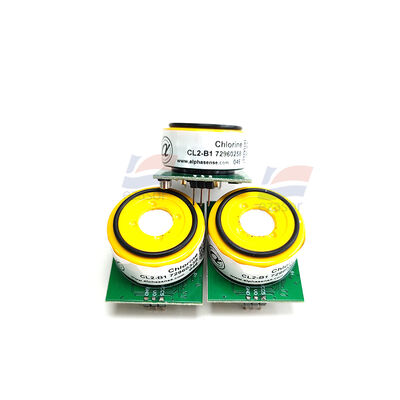
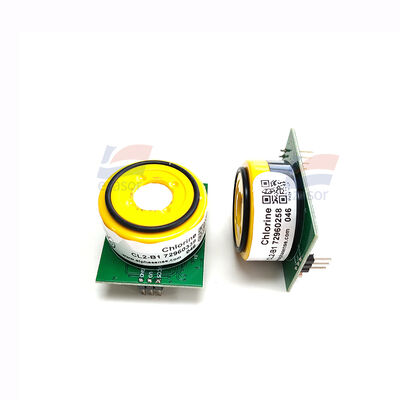
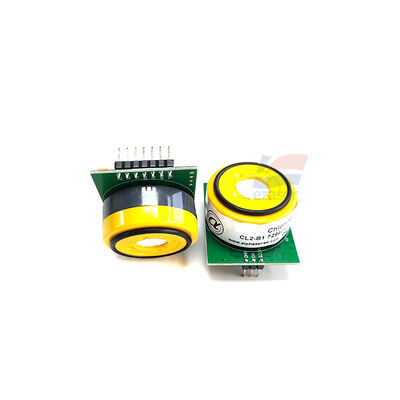
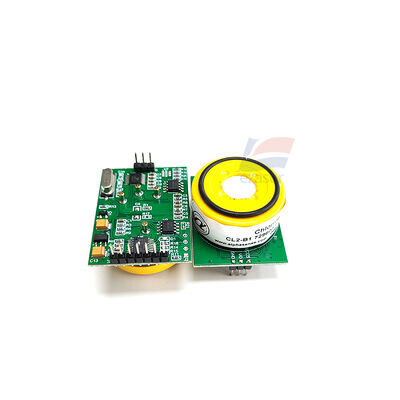
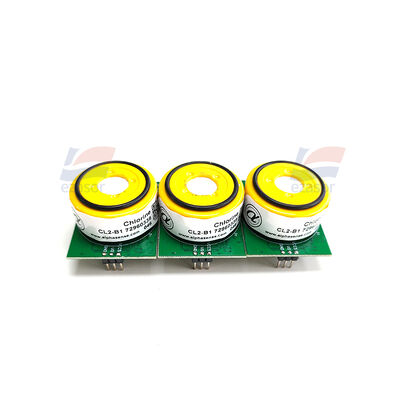
YJJ CL2-B1 Chlorine Gas Secondary Development Module Electrochemical Sensor + Signal Conditioning Digital Module
Features:
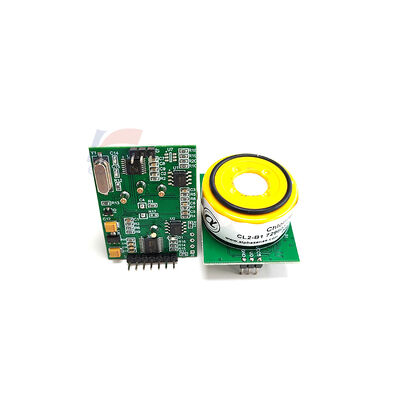
CL2-B1 Chlorine Gas Secondary Development Module (CL2-B1 Electrochemical Sensor + Signal Conditioning Digital Module)
> Note: CL2-B1 is the original electrochemical bare sensor; **Secondary development module = CL2-B1 sensor + Special Electrochemical Bias Conditioning Circuit + MCU Signal Processing Board**, completing I-V conversion, zero point, temperature compensation, and outputting digital/analog signals externally, directly connecting to PLC, microcontrollers, industrial control systems, without needing to perform weak current conditioning by oneself
I. Sensor Body Underlying Parameters (Module Built-in CL2-B1)
| Measured Gas | Cl₂ Chlorine Gas |
| Measurement Principle | Three-electrode electrochemical fuel cell |
| Measurement Range | **0 - 20 ppm** |
| Short-term Overload | 60 ppm (not for long-term use) |
| Sensitivity | -600 ~ -1150 nA/ppm |
| T90 Response Time | < 60s |
| Resolution | 0.02 ppm |
| Zero Point Drift | < 0.5% FS / Year |
| Lifespan | 24 months |
| Working Environment | -20 to +50°C; 15 - 90% RH, no condensation |
| Cross-Interference | NO₂ significant positive interference; SO₂, NO weak interference |
II. Complete Electrical Parameters of the Secondary Development Module (Common Digital Module Specifications Available on the Market)
Table
| Power Supply | **DC 9-24V wide voltage range**; typical power consumption < 120mA |
| Signal Output (either one or dual output) | ①RS485 - Modbus - RTU (digital); ②4-20mA analog |
| 4-20mA Mapping | 4mA = 0ppm; 20mA=20ppm |
| RS485 default | 9600‑8‑N‑1; Address 1; Address and baud rate can be modified |
| Module output data | Chlorine gas concentration (ppm), sensor temperature, device status, fault bit |
| Accuracy (whole machine) | ±3% FS (including sensor + circuit error) |
| Update rate | 1Hz; Configurable |
| Protection | Circuit board IP30; Sensor chamber IP40 |
| Size | Approximately 85×55×35mm (varies slightly by different manufacturers) |
III. Key registers of Modbus‑RTU (Key focus for secondary development)
| Register address | Function | Data type | Description |
| 0x0000 | Chlorine gas concentration | uint16 | Original value, multiplied by 10; Example: 125 → 12.5 ppm |
| 0x0001 | Module internal temperature | int16 | Multiplied by 10 |
| 0x0002 | Device status | uint16 | 0 - Normal; 1 - Sensor fault; 2 - Zero point abnormal |
| 0x0100 | Device address | uint16 | 1 - 247 (writeable) |
| 0x0101 | Baud rate setting | uint16 | 0 = 9600, 1 = 19200… |
Reading example: Register 0x0000 returns `00C8`, decimal 200 → 20.0 ppm (full scale).
IV. Pin Definitions (Standard 5-pin Terminal)
| 1 | VCC+ 9‑24VDC |
| 2 | GND Power Ground |
| 3 | 485‑A |
| 4 | 485‑B |
| 5 | 4-20mA Output |
Key Considerations for Secondary Development
1. Polarization Time**: The module must be polarized for 2-4 hours before power-on for the electrochemical sensor to stabilize; new sensors must be fully polarized before being calibrated with Alphasense.
2. Condensation Hazard**: Chlorine module must not have condensation; condensation will directly corrode the electrochemical electrolyte and permanently damage the sensor; in high-humidity scenarios, additional air path drying and filtering are required.
3. Interference Gases**: Reading is falsely high when there is NO₂ (nitrogen dioxide) in the environment; the software needs to perform cross-compensation.
4. Zero Point Calibration**: Zero point calibration must be completed by introducing clean zero air; it is not allowed to forcibly zero in normal indoor air.
5. IST Version Differentiation**: CL2-B1-IST (with onboard storage + temperature chip) module can read the original factory sensitivity parameters, simplifying calibration; ordinary CL2-B1 does not have an IST chip and requires manual writing of sensitivity.
6. Wiring**: RS485 communication is recommended to use shielded twisted pair; the 4-20mA load resistance should be ≤ 500Ω.
Applications
Chlorine leakage in sewage treatment plants, chemical workshops, scrubber tail gas, pipeline chlorine monitoring, PLC/DCS system integration.
If you need, I can provide:
1. Complete Modbus read-write instructions for the module;
2. 4-20mA conversion formula;
3. Comparison table of CL2-B1 bare sensor vs CL2-B1 secondary development module.
Specifications:
| Measured Gas |
CL2 |
| Measurement Range |
0 - 20 ppm |
| Short-term Overload |
60 ppm |
| Sensitivity |
-600 ~ -1150 nA/ppm |
| T90 Response Time |
< 60s |


 Your message must be between 20-3,000 characters!
 English